The Alberta Museums Association's Community Engagement Initiative (CEI) works towards incorporating community engagement into the programs & services of the AMA and the general practices of the Alberta museum community. CEI supports museums by demonstrating the importance of community collaborations as a viable path toward sustainability. This blog provides tools & resources to support museums in creating & maintaining meaningful connections with communities.
Wednesday, 11 September 2019
An Interview with Keynote Presenter Professor Helen Chatterjee
Professor Helen Chatterjee will be delivering the closing keynote address, “Museums, Health, and Well-being: The Bio-psychosocial Impact of Museum Participation,” at the Alberta Museums Association 2019 Conference. In advance of the conference, Prof. Chatterjee spoke with Ann Ramsden, Executive Director of the Arts and Heritage Foundation of St. Albert, for an interview.
You are a professor of Biology specializing in genetics, evolution, and environment. With this academic background, how did you become interested in museological research?
I trained as a zoologist with a PhD in primatology, and my zoology research has always involved using zoology museum collections to look at morphological adaptation, evolution, and conservation of endangered species. During my PhD, I ‘inherited’ University College London’s Grant Museum of Zoology. Initially, I began as a TA, teaching using the collections, but when the Curator retired, I took on that role. I ran the Museum for ten years before becoming Director, then Deputy Director of UCL Museums for five further years. I still use the museum today for teaching and research.
During my time at the Grant Museum, I began researching object-based learning and the value of museums to health and well-being. Ten years ago, I was awarded the first ever UK research grant to explore the role of touch and object handling in relation to well-being and health, and my work has expanded from there.
Monday, 26 August 2019
A Preconference Conversation with Keynote Presenter Dr. Carol Ryff and Moderator Dick Averns
Dr. Carol D. Ryff will be delivering the opening keynote address, “Bridging the Museum Experience to Well-being and Health,” at the Alberta Museums Association 2019 Conference. In advance of the conference, Dr. Ryff sat down with Dick Averns, artist and engagement coordinator with CARFAC Alberta, for an interview.
Averns: Thanks for sharing some insight into your work, Carol, on the Conference theme, As a Whole: Well-being, Health, and Museums. So, how does your work and research promote health and well-being, and how do you see museums as relevant?
Ryff: For the last thirty years, my research has addressed three main questions: What is human well-being? How can we measure it? And how does it matter for health? My past research has not explicitly linked museum experiences to health and well-being, although I am an advocate for work in that direction. I’m especially interested in how partaking of museums might impact people’s sense that their lives have meaning, purpose, and direction, as well as their sense that they are experiencing personal growth over time.
Averns: Thanks for sharing some insight into your work, Carol, on the Conference theme, As a Whole: Well-being, Health, and Museums. So, how does your work and research promote health and well-being, and how do you see museums as relevant?
Ryff: For the last thirty years, my research has addressed three main questions: What is human well-being? How can we measure it? And how does it matter for health? My past research has not explicitly linked museum experiences to health and well-being, although I am an advocate for work in that direction. I’m especially interested in how partaking of museums might impact people’s sense that their lives have meaning, purpose, and direction, as well as their sense that they are experiencing personal growth over time.
Wednesday, 15 August 2018
Opening and Closing Plenary Presenter Preview with Joe Vipond
Joe
Vipond
has worked as an emergency physician in Calgary for eighteen years. In 2012, he
became one of the key organizers for the successful Alberta Coal Phase Out
campaign and the subsequent Canadian Coal Phase Out campaign. He currently is
involved with The Canadian Association of Physicians for the Environment (CAPE),
the Alberta Wilderness Association, and the CAPE-Alberta Committee, a regional
group of physicians, nurses, and other health professionals who successfully
negotiated the creation of Alberta Health Services first Office of
Sustainability. When not doctoring or trying to change the world, he does his
best to be a good husband and dad to his two amazing children, Sadie and Willa.
Please provide a
brief overview of your role and the work that your organization does. How do
you see your work connecting to the museum world?
Museums have
two important connections to climate. First, they are institutions of
communication. Through museums we learn. And we desperately need to learn more
about the science of climate. It has become the undiscussable topic...who
really wants to talk about the possible end of the world, and our role in it?
But we desperately need to talk about it. Because by ignoring the subject, we
also make it impossible to fix it.
Opening and Closing Plenary Presenter Preview with Cathy Molloy
Cathy Molloy is the Director of Markham
Museum. She was born in Toronto and grew up in the Rouge Valley, specifically
on the edge of one of its wonderful ravines. Before returning to Markham Museum
and becoming its Director in 2008, Cathy worked as a Curator at both the Oshawa
Museum and Markham Museum, and was instrumental in raising funds to build the
Aurora Cultural Centre. Cathy’s interest in environmental issues goes back to
her teen years where she participated in the Boyd Conservation Archaeological
Summer Field School, which was the start of a life-long desire to better
understand how humans interact with the natural world.
Please provide a
brief overview of your role at Markham Museum and the work that your
organization does.
The Vision of Markham
Museum is to "inspire a life-long curiosity, pride in, and care for, the
people, tangible heritage, places, lands and waterways of the City of Markham:
past, present and future.” Our mission is to “examine Markham by engaging
technologies developed and used by all human cultures to live in the natural
world; agriculture and food; material culture; engineering and environmental.
We will engage science, industry, history and the arts to understand how
Markham became what it is today and what its possible futures could be”.
Monday, 5 February 2018
Museums and Environment
One
of the questions that repeatedly comes up when museums are asked to think about
how they can engage with environmental issues is “our museum is about [insert subject here] - how do we engage
in discussions around the environment when it does not apply to us?” When
museum professionals look at their institutions through a different lens,
however, it becomes obvious that there are many connections to the environment.
By highlighting these connections, museums can be agents of social change by
engaging their communities in timely discussions around this vitally important
topic.
Still
not sure how your museum might fit? Consider the following broad examples:
Monday, 8 January 2018
The Lougheed House's Beltline AlTOURnative Project
The Lougheed House received the 2017 Leadership Award for Engagement for the Beltline AlTOURnative Project. In this post, the project team shares their story of engaging Calgary's Beltline community in a new and different way.
The
Lougheed House is known for traditional Victorian grandeur, and as a sandstone
sentinel of the prairie. The House offers interpretive tours that contextualize
its historical and current place in the growing city of Calgary throughout its’
125 years of history. However, there are many additional stories that could be
wound through and around this local landmark; stories that are challenging yet
necessary to tell.
Thursday, 21 September 2017
A Welcome from The Alberta Legislature
The Alberta Legislature is not a conventional museum. At
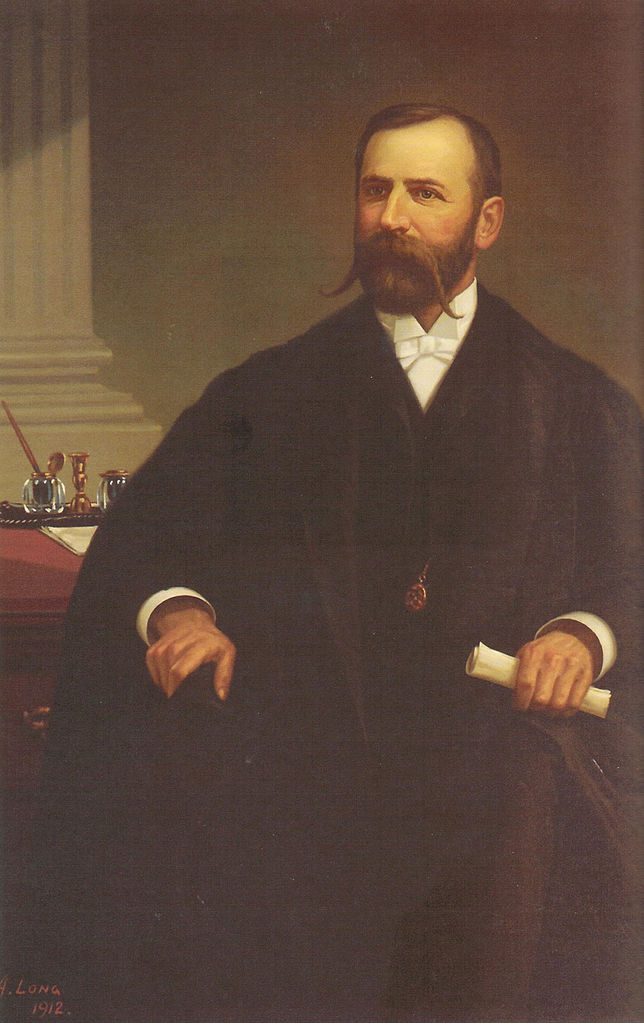
first glance, its only artifacts seem to be a building and portraiture of long-forgotten
lawmakers who maintain an air of solemnity (despite visiting schoolchildren
making fun of Speaker Wilson’s prodigious
mustache).
It is much more than that, however.
Our mandate is broad: to educate the public about the
functions of government, to share the province’s political and social history,
and to let Albertans know that the handsome Beaux-Arts building in the river
valley isn’t just a landmark or an office for politicians. It belongs to the
people of Alberta.
Subscribe to:
Posts (Atom)