The Alberta Museums Association's Community Engagement Initiative (CEI) works towards incorporating community engagement into the programs & services of the AMA and the general practices of the Alberta museum community. CEI supports museums by demonstrating the importance of community collaborations as a viable path toward sustainability. This blog provides tools & resources to support museums in creating & maintaining meaningful connections with communities.
Armando Perla Chief Curator Toronto History Museums, City of Toronto
Armando Perla, Photo Credit: James Recine
Having
been trained as a lawyer, I started my professional journey working with
refugees and asylum seekers in Canada. After graduating from law school, I
worked with Haitian migrant workers in the Dominican Republic during my time in
Washington D.C., children in Central America who were trafficked and sexually
exploited, and children’s rights advocates from the global south in Sweden.
After several years abroad, I returned to Canada to be part of the team
developing the Canadian Museum for Human Rights (CMHR). It was at the CMHR that
I met Métis curator and scholar Tricia Logan and began a journey of
self-discovery that completely transformed the way I understood and practiced
human rights. When I started working at the CMHR, over a decade had passed
since my arrival in Canada as an asylum seeker. I had attended the University of Winnipeg, where I studied
political sciences, and had also completed a Bachelor of Laws at Laval
University in Quebec City and a Master of Laws at Lund University in Sweden.
However, I had not learned about residential schools or Indigenous history.
Learning from Logan that human rights were a Western construct that had often
left out Indigenous perspectives was also unsettling for me. My Canadian and European
legal training had never focused on looking critically at human rights.
Site visits
are an important part of the Alberta Museums Association (AMA)’s work. Whether
to offer a course, provide in-person advisory services, attend an exhibit
opening, or simply connect, site visits bring a human touch to the AMA’s
programs and services. Unfortunately, the pandemic-related public health
restrictions of the last two years meant we had to scale back our in-person visits
to Alberta’s museums. The lifting of restrictions, and many museums reopening
just in time for spring, presented an opportunity to get back on the road and
start reconnecting. Over the course of two weeks in March, Jennifer Forsyth, Lauren Wheeler,
and Itravelled around Alberta
visiting the six museums taking part in the Reconsidering Museums
project as pilot sites. Here are some of the highlights of the trips and a look
at the diversity of museums across Alberta.
Caroline Loewen, Project Lead Alberta Museums Association
What do Canadians see as
the value of museums for them, their communities, and for Canada? Reconsidering
Museums, a three-year national project, sets out to answer this question.
Through a rearticulation of the value of museums and a rebrand of the sector,
this project aims to support museums with the tools and language necessary to
better connect with and serve their communities, deepening their relationship,
and therefore their relevance, to the Canadian public.
I have been asked a lot in my life, “Why museums?” Why choose to go to school to study history with plans to work in a museum? Why decide to focus on collections and exhibits in museums as a career path? Why stay in museums given the current economy and uncertainty? The question is always, “Why museums?” But let me ask you a few questions and see if the answer becomes clearer.
by Laura Rose Iocca Fourth Year Museum and Heritage Studies Student University of Calgary
During my time as a practicum student working at the University of Calgary Nickle Galleries, I was given the opportunity to work with one of the largest academic antique coin collections in Alberta. Through this experience, I was able to grasp the essence of what is involved in collections management, and the importance of this role relating to museum and heritage studies.
The Nickle collection consists of a variety of coins from various eras from Europe to Asia Minor. With the guidance of Marina Fischer, the Numismatic Specialist for the Nickle, I had the privilege of performing tasks that are vital to collections management: large scale inventory and cataloguing of the artifacts, researching locations on ancient maps, and ensuring descriptions and information about the artifacts were inputted correctly. As well, I cultivated vital handling techniques and storage practices for antique numismatics.
Ahead of the Mentorship Q & A session, Meredith Leary, Program Coordinator, sat down for conversations with two additional participants in the Alberta Museums Association (AMA)'s Mentorship Program: Katelin Karbonik, a Mentee in the 2020 cohort, and Robert Janes, a Mentor from the 2019 and 2020 cohorts. In the conversations below, they share their experiences in the Mentorship Program, and their thoughts about the value that mentoring with established and senior-level museum professionals can bring to the Alberta museum community.
Lucie Heins, BSc, MA, Assistant Curator, Daily Life & Leisure Royal Alberta Museum
Uncertain Times
March 11, 2020: "WHO [World Health Organization] formally declared the existence of a pandemic."[i]
Little did we know that one year later we would still be in the midst of a pandemic. It has been a difficult year for museums around the world as they navigate the effects of restrictions from social distancing, from reduced capacity to temporary closure. The big question is, how do they remain sustainable?
At the Alberta Museums Association (AMA)'s 2014 Conference, the panel discussion, "Imagining Possibilities: Building Governance Capacity for Sustainable and Relevant Community Museums" saw four members of the AMA Board of Directors discuss how to bring the wisdom of the Sustainability Working Group Report to Alberta's institutions. The panellists, Laura Gloor, Blane Hogue, Lorraine MacKay, and Bill Peters, discussed how museums can:
1. Be seen as vital, necessary, and active contributors to our communities;
2. Understand and respond to the pressing needs of our communities through our numerous connections and networks where expertise, information, and resources are shared;
3. Organize and govern courageously in order to embrace new, efficient, and sustainable behaviours and practices; and
4. Understand how to successfully integrate all dimensions of sustainability - social, cultural, health, environmental and financial - into a vibrant expression of community.
In this piece, Bill has gathered the reflections of his colleagues as they look back on the session and consider the relevance of these lessons today.
Throughout my involvement with the Alberta Museums Association (AMA), the AMA has distinguished itself as a progressive force in the field. Always thoughtful about emergent trends affecting both museums and communities, the AMA has understood the need for museums to be aware of, and engaged with, the forces that shape the living culture and the culture of museums. Over the past 20+ years, I have participated in numerous AMA projects, including two favourites:
the development and roll-out of the Museum Excellence Program in the early 2000s, and
delivering the AMA's 2003 conference keynote, which focussed on the topic, "Museums in Search of a Sustainable Future," published the following year in the Alberta Museums Review, Fall 2004.
In this e-interview, Rachel Chong explores her work creating the Indigenous Information Literacy Project at Kwantlen Polytechnic University Library. This project's development and implementation has increasingly been the subject of library professional development and information sharing in the GLAM sector (galleries, libraries, archives, and museums). As museums are facing similar knowledge-keeping, -use, and -access decisions and situations, the Alberta Museums Association (AMA) asked Rachel to share her experience with the project directly with museums.
Aimee Benoit, Present Curator, and Wendy Aitkens, Past Curator Galt Museum & Archives
Over the past two decades, the Galt Museum & Archives has tackled many sensitive and potentially controversial subjects for public presentation. They include exhibits on a local woman's survival in the Auschwitz concentration camp; the various influences in climate change; Indigenous people earning the rights to wear special clothing; the achievement, challenges and issues involved in sports; recent immigration to Lethbridge; and 2SLGBTQ+ histories.
Each exhibit and the associated programs involved experts in the field, support from the community, and solid research. Planning for feedback, both positive and negative, was a major part of each project.
The Critical Contributions of Regular Peer Connection among Museum Professionals
by Tara Beck and Isabella Borrelli
The journey towards this blog entry began in February 2020
when two colleagues sat down to consider how their experience with communities
of practice might contribute to the AMA Conference about museums and
organizational sustainability. At the time, conversations primarily revolved
around the value of communities of practice in combatting the institutional and
professional silos common across Edmonton’s museum landscape (Edmonton Heritage
Council’s Comprehensive Museum Strategy Report, 2012). Knowing the difficulty
in a major city, one can only assume that our counterparts in rural Alberta
face similar challenges.
A lot has happened since February which has encouraged us
to broaden our considerations of the ways communities of practice can serve us
in our work. Museums are at a pivotal point in their history. The Covid-19
pandemic has forced many of them to shrink dramatically, and in some cases
close. The unmasking of deep rooted institutional systemic racism has called on
museums to meaningfully address their histories and make changes for their
futures.
Defining a Path Forward: Narrowing Down a
Complex Problem
by Kristen Cousineau and Christine Moreland
The
world we live and work in is rapidly changing, and while this is nothing new,
the current crisis highlights the need for cultural institutions to be
flexible, resilient, and creative in our approaches to these changes. But what
happens when the changes are coming at us so quickly and the scope of them
seems so overwhelming that they become paralyzing? How can we take the first
step towards problem solving, sustainability, and continued relevance?
Congratulations! You have a ‘How Might We’ statement (HMW) that narrows down the big, unwieldy problem, to a manageable question that includes constraints and insights. Now, let’s talk about how to start answering that question: ideation.
Just joining us? Read Part 1 to discover how to create your guiding question, a ‘How Might We’ statement.
Ideating is often used as a synonym to brainstorming. However, brainstorming is traditionally spontaneous, and with ideating, we’re talking about a concrete, planned approach to creating new ideas. (We also prefer saying ideation because it differentiates our process from the negative experiences you may have had brainstorming in the past.) Ideation takes you a big step forward in solving your problem.
What is Giving Tuesday? It is a global movement for giving and
volunteering, a day that calls for charities, individuals, and companies to
rally for a cause which “unites communities by sharing our capacity to care for
and empower one another.” The eighth annual Giving Tuesday is December 1, 2020.
Before you start planning activities, it
makes sense to ask a key question: what outcome do you hope to achieve by
participating in Giving Tuesday? This will help guide both your strategy and the
resources you will invest. Take into consideration a number of factors,
including:
What else is happening in your organization right now?
What else is happening in your community for Giving Tuesday?
Do you have a presence on social media that will help drive donations to your cause?
Is this part of your annual campaign?
Is this a strategy you can leverage to attain your goals?
Those are a few starting points for your reflection
or discussion about whether this day warrants your focus and energy.
In hiring a Collections Officer at Fort Calgary, a goal of this new position was to provide a full-time opportunity for an emerging professional in the field. Recognizing that this person may need some help navigating all parts of the job, an experienced Collections Management professional, Gail Niinimaa, was engaged as a consultant to liaise with Fort Calgary’s President & CEO, Naomi Grattan, and work directly with the Collections Officer, Adrienne Dewsberry, as a mentor. In this post, they reflect on their experience with this project.
Miss Part 1? Click here for Reflections on the AMA Mentorship Program.
Working with Fort Calgary to Mentor a Junior Employee
Gail Niinimaa,
Niinimaa Enterprises Inc.
During the Alberta
Museums Association (AMA) 2019 Conference, at the reception at the Royal
Alberta Museum, I ran into Naomi Grattan, the new President & CEO of Fort
Calgary. We chatted about what we were up to and she mentioned that she may
like to pick my brain about their collection and some of their collections
management issues. I suggested that I would be happy to be a consultant to a
junior staff member and to work together with them, to share my knowledge and
to help them along the way.
In July 2019, the
Alberta Museums Association
(AMA) launched the Mentorship Program, a flexible, self-directed
program for Mentors and Mentees to share experiences, develop skills, and gain
insights on the challenges, opportunities, and innovative practices in the
museum community. Running from October 2019 to August 2020, the inaugural year
of the Program was impacted by the COVID-19 pandemic. In this post, participants from the first cohort reflect on their experiences adapting the
Program to meet their goals.
Being a Mentor in
the Second Half of Life
Gail Niinimaa,
Niinimaa Enterprises Inc.
2020 is a year
for me where I have definitely moved into the second half of my life. This is a
time when I can give back and decide what impact I may want to leave on this
world! In 1979, when I started at Glenbow and was given my pension documents to
sign, the date of April 14, 2020, seemed very far into the future. I remember
remarking to my colleague who was about 20 years older than me that there was
no way that I would still be at the Glenbow in 2020! My prediction was fairly
accurate – I did formally leave the Glenbow in 2008 after a combination of full-time
and contract work over the years – but I have continued to be an occasional
consultant for them in the last 12 years, the most recently being in March 2020
right before COVID-19 shut down the world.
Congratulations to Herman Yellow Old Woman, recipient of the 2020 Lieutenant Governor’s Award! This Award recognizes Herman’s instrumental role in championing the rights of Indigenous communities to represent themselves and to have a voice in creating and shaping museum spaces.
Herman Yellow Old Woman is presented with the 2020 Lieutenant Governor's Award.
In selecting Herman for this Award, the AMA Board of Directors recognizes his spirit of giving and important role in establishing best practices for the Alberta museum community. Herman’s achievements at a provincial, national, and international level have made an exceptional impact and contribution to Alberta’s museum community.
Among these achievements, Herman was a key member of the committee behind Glenbow’s Nitsitapiisinni Gallery, created to reflect the Blackfoot worldview. The Gallery has been internationally recognized as one of the first exhibits told from an Indigenous perspective and is the epitome of the reconciliation and healing museums are now striving for.
One of Herman’s most impactful contributions to the museum sector has been his fight for the repatriation of Chief Crowfoot’s regalia from The Royal Albert Memorial Museum in Exeter, UK, an effort that began over a decade ago. Alongside his colleagues at Blackfoot Crossing Historical Park, Herman worked tirelessly to educate both the public and Exeter City Council about the importance of Blackfoot Cultural Patrimony, and encouraged them to see clothing not as objects or artifacts but as living beings – ancestors who, upon their return to their people, have the ability to help heal the harms done by the colonial legacy of museums. This year, the hard work paid off when Exeter agreed that Crowfoot should be returned to the Siksika Nation. Said Mr. Yellow Old Woman: “I feel like we're bringing his spirit home.”
Herman was instrumental in the development of the First Nations Sacred Ceremonial Objects Repatriation Act (FNSCORA), and the repatriation of over 260 sacred and ceremonial objects from Glenbow’s collections and many more from other museum collections. He has cared for museum collections worldwide by conducting ceremony, visiting and caring for sacred bundles and the ancestors residing in museums in Canada and internationally.
Herman has left an indelible mark on Alberta’s museum sector. His contributions are a gift to future generations, not only for the Blackfoot, but for museum professionals navigating the changing role of museums in society and the necessary work of reconciliation.
Congratulations
to Lougheed House, the 2020 recipient of the Robert R. Janes Award for Social
Responsibility! This Award recognizes Lougheed House’s commitment to creating
exciting and unique visitor experiences that tell the lesser-known stories of
Calgary and to integrating social responsibility into all aspects of its museum
practice.
The team at Lougheed House has gone beyond the traditional historic house museum to embrace, challenge, and educate the communities around it and evolve alongside them.
“At
Lougheed House we believe that our story is best told together.”
Watch Lougheed House's acceptance video below:
Through its many ongoing partnerships with Indigenous, racialized, queer, and feminist groups, Lougheed House is telling the lesser-known histories of the many and varied communities it serves. Its responsiveness to the feedback gathered from these diverse communities firmly positions it as a leader in the museum field.
Métis veteran Sergeant Major George Pambrun, Retired, at the raising of the Métis flag at the Lougheed House Garden Festival in July 2019.
Lougheed House created a Community Engagement Framework and a Re-Imagined Exhibition Development Plan that is embedded with community feedback. Standing out as a model for other institutions, this framework guides Lougheed House’s work with the community and enables it to transform its exhibit spaces to reflect the more diverse history of Calgary.
Exhibits and events, such as Exploring Métis Identity: Past and Present and Roar: Exploring Queer History and Gender Identity, are shining examples of Lougheed House’s re-imagining and historic illumination.
Costumed attendees pose for the photo booth during Outliers: Queer History in Calgary in May 2019.
In focussing on the evolution of the House and telling these stories together, Lougheed House is building a thriving and sustainable organization that exemplifies the active role museums can take alongside their partners in shaping the narrative of a dynamic Alberta.
Congratulations
to Harpreet Dhanjal, the recipient of the AMA’s 2020 Leadership Award for
Engagement! This Award recognizes Harpreet's commitment to equity, diversity, and inclusion in her role
as Public Programmer at Calgary’s TELUS Spark.
Harpreet is passionate about making the cultural
sector more welcoming and inclusive. “It’s because I never saw myself here,”
she says, “that community engagement and equity work is such an important part
of my practice.”
Watch Harpreet's acceptance video below:
Never one to
ignore or let slip an opportunity to advocate for those who are
underrepresented, Harpreet is exceptional in her ability to engage diverse
community members with culture. She carefully designs visitor experiences that
are relevant, narrative driven, modern, and occasionally provocative, such as
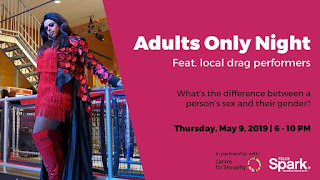
the Adults Only Night program titled He, Her, They, Everyone, and You (A.K.A.
Beyond the Binary), a program that celebrated gender diversity while educating
visitors on the intersection of sexuality, gender, identity, science, history,
and art.
When developing
programming, Harpreet involves experts who represent a range of identities and
perspectives. Fearless in engaging new community partners, Harpreet has created
programs that bring together research academics, drag performers, and rocket
scientists. She has positioned TELUS Spark as a trusted ally and sought the
expertise and collaboration of LGBTQ2S+ community partners.
Passionate about
making the cultural sector more welcoming and inclusive, Harpreet always
prioritizes equity, diversity, and community engagement in her work. Harpreet
crafts meaningful visitor experiences that provoke curiosity, reflection,
discussion, and interaction, creating brave spaces for anyone and everyone to learn,
play, and engage.
A dedicated advocate and ally for underrepresented communities, and a champion for diversity and inclusion across the museum sector, Harpreet
exemplifies the leading role museums have as agents of social
responsibility.
Congratulations, Harpreet!
Leadership Award for Education
TELUS World of Science - Edmonton
Congratulations to TELUS World of Science – Edmonton (TWOSE), the recipient of the AMA’s 2020 Leadership Award for Education! This Award recognizes TWOSE’s work in creating safe and supportive spaces for science learning for girls and women.
An all-female team worked across departments to tailor programming at TWOSE to individuals that identify as women in order to address gender gaps and improve accessibility in Science, Technology, Engineering, and Mathematics (STEM) learning. The team set out to create a climate of support and change for women at all stages of their science careers.
Watch TELUS World of Science's acceptance video below:
The five distinct programs making up Women and Girls in STEM focus on addressing the issues that prevent women and girls from pursuing careers in science. Presenting material in an environment that is supportive of girls and women, the programs aim to increase confidence to pursue STEM careers, decrease gender stereotyping by providing a positive space for girls to interact with professional female role models in STEM fields, and improve positive peer influence by creating safe spaces to explore STEM topics and to learn new skills in the TELUS World of Science – Edmonton makerspace.
Designed to support girls aged ten to adults, the Women and Girls in STEM programs promote ongoing learning at critical ages where women and girls tend to lose interest in STEM. Not only do the programs provide an opportunity for girls to interact with like-minded peers, they also foster a support network of confident female STEM researchers.
These educational programs are engaging future and current female researchers’ hearts and minds in science. In empowering women and girls, TWOSE is a role model to their peers and colleagues of the importance of museums as agents of social change.
Congratulations, TELUS World of Science – Edmonton!